
Super Pencil: Cleaner Cuts. Less Tissue Damage.
An advanced electrosurgical pencil engineered to reduce lateral thermal spread, minimize charring and collateral tissue damage, and produce cleaner surgical smoke compared with standard electrosurgical pencils. Designed for surgeons who require greater control and predictability in monopolar cutting and coagulation.
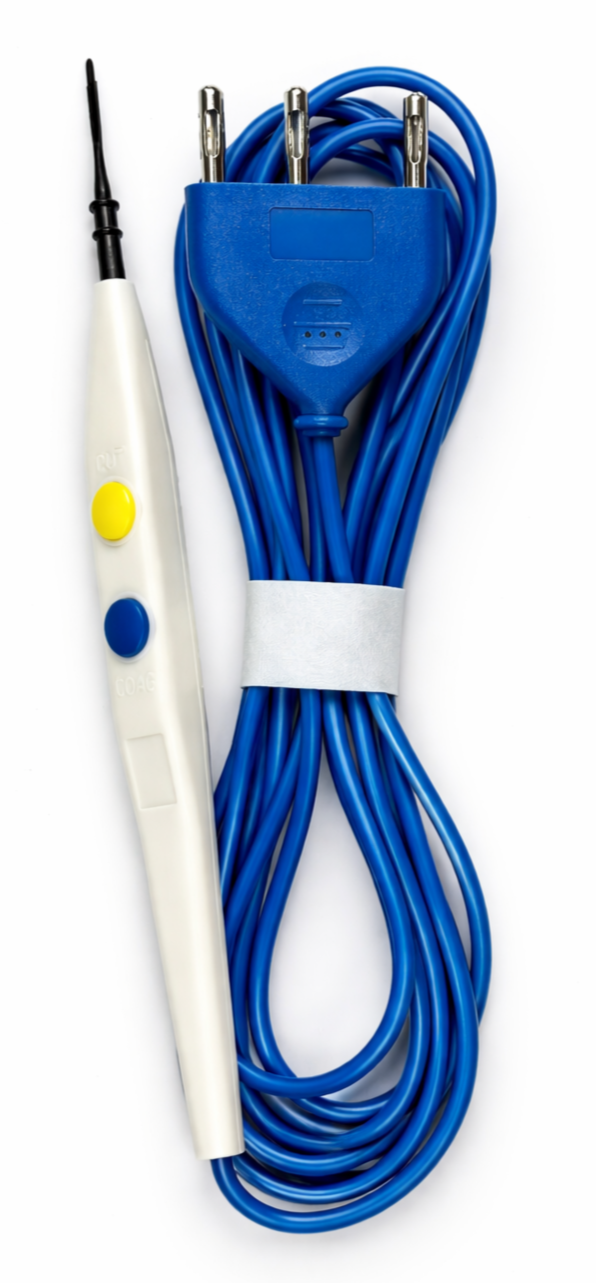
Why Cleaner Cuts and Reduced Thermal Damage Matter
During electrosurgical cutting and coagulation, excessive lateral thermal spread and tissue charring can contribute to unintended collateral tissue injury, reduced precision, and increased surgical smoke. These effects are commonly accepted limitations of standard electrosurgical pencil designs.
By limiting thermal spread and controlling tissue interaction at the point of application, cleaner incisions can be achieved with reduced collateral tissue impact. In clinical practice, this level of control may contribute to improved healing conditions, including reduced scarring and potentially faster recovery compared with procedures performed using conventional electrosurgical pencils.
Design Priorities and Performance Outcomes
The Super Pencil was developed to address performance limitations commonly associated with standard electrosurgical pencils, with a primary focus on reducing thermal impact on patient tissue while maintaining precise cutting and coagulation performance.
Rather than relying on conventional commodity design approaches, the Super Pencil reflects a deliberate emphasis on controlled tissue interaction, reduced charring, and minimized collateral thermal effects during electrosurgical activation. These performance outcomes support cleaner cuts and reduced unintended tissue damage, without requiring changes to standard monopolar surgical workflows.
Performance Demonstrations
Side-by-side demonstrations illustrate differences in cutting behavior, tissue interaction, and thermal spread between the Super Pencil and standard electrosurgical pencils.
Super Pencil vs standard electrosurgical pencil — liver tissue
Super Pencil vs standard electrosurgical pencil: skin tissue
Super Pencil vs standard electrosurgical pencil muscle tissue
Histology Comparisons
Histological evaluation provides visual context for tissue interaction during electrosurgical activation. Comparisons illustrate differences in lateral thermal spread, tissue margins, and surface charring between the Super Pencil and standard electrosurgical pencil designs.
Histological section corresponding to pig liver tissue cutting demonstration.
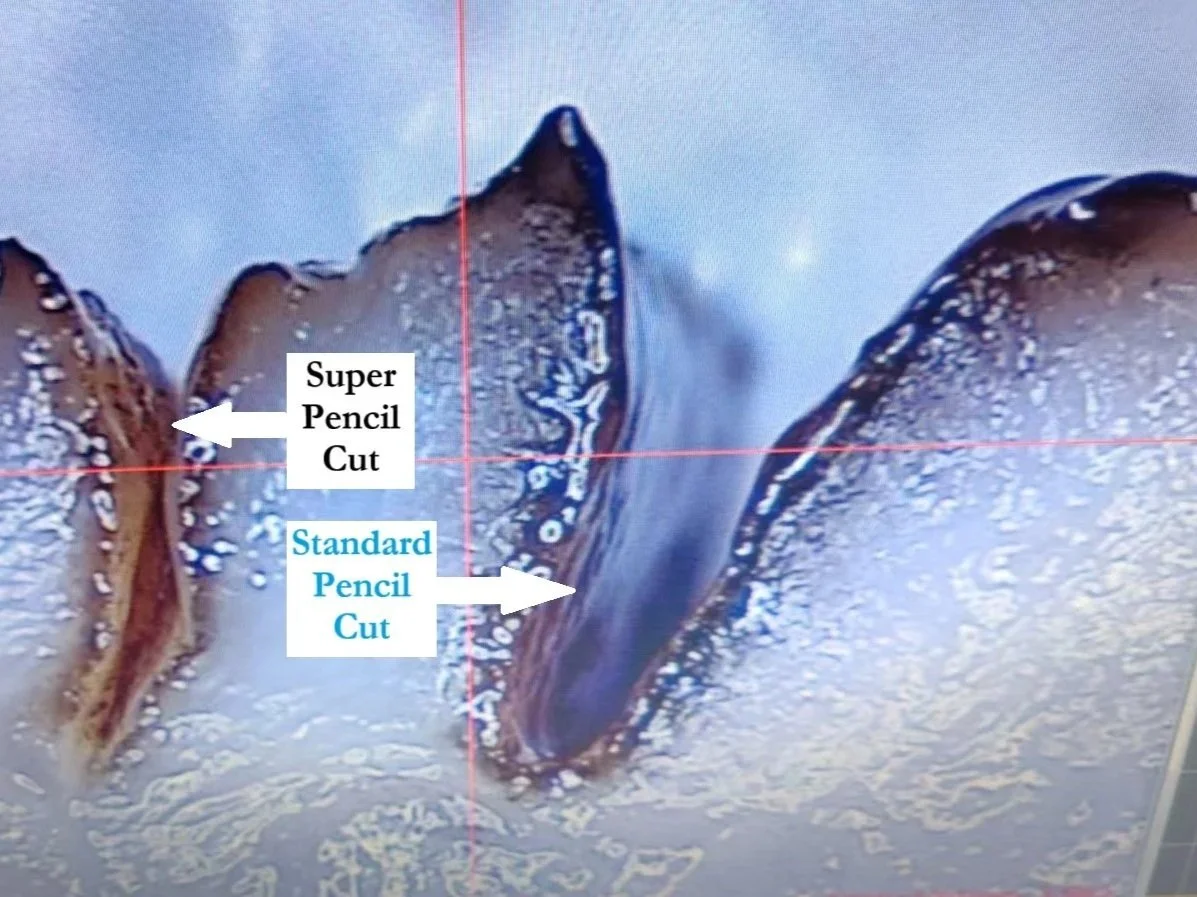
Histological section of pig skin tissue cutting demonstration.
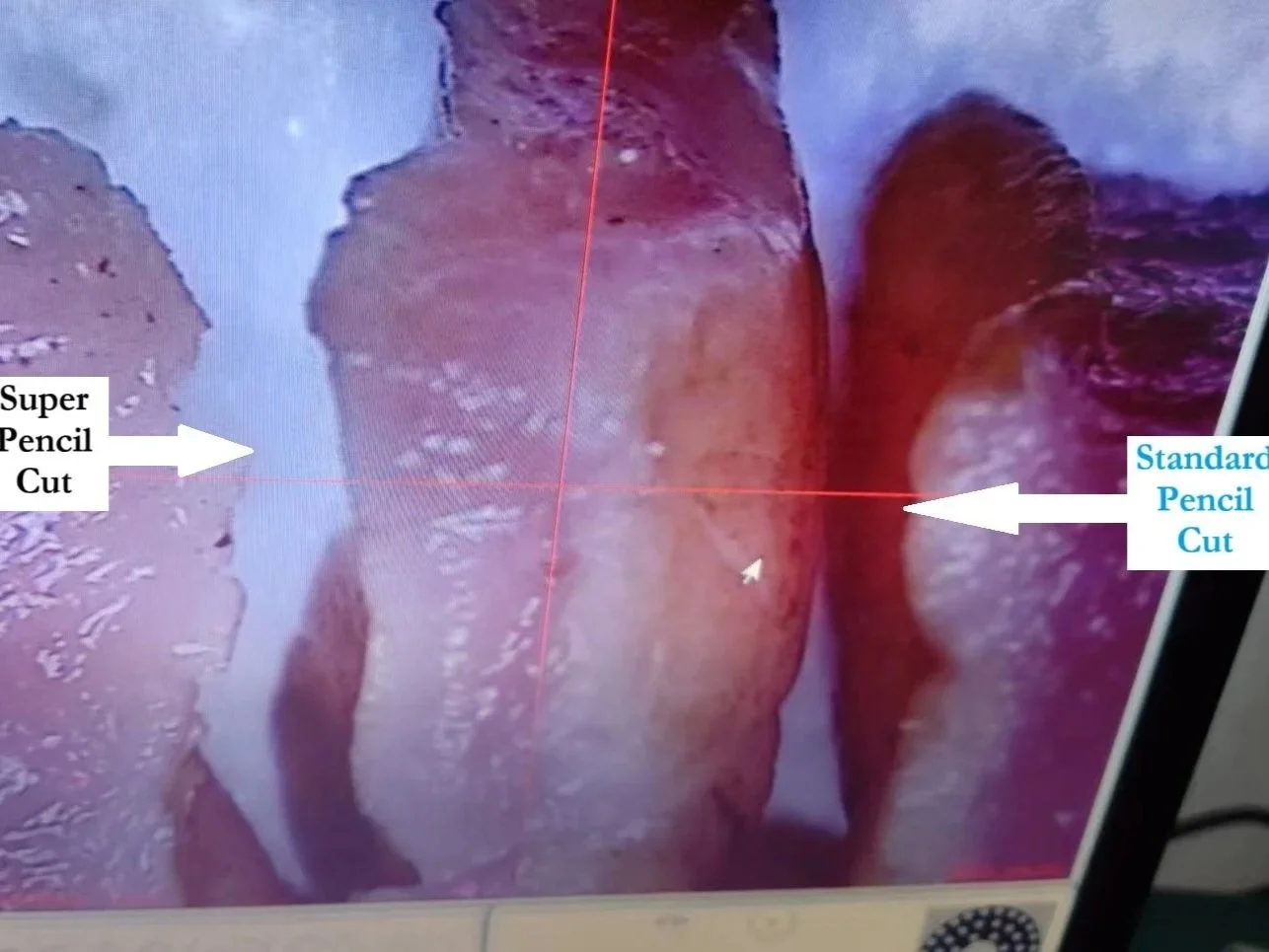
Histological section of pig muscle tissue cutting demonstration.
RF NonStick Ceramic Coating
The Super Pencil incorporates RF NonStick ceramic coating, a surface technology developed to reduce tissue adhesion and support consistent electrode–tissue interaction during electrosurgical activation.
By limiting tissue buildup on the electrode surface, the RF NonStick ceramic coating contributes to reduced charring, cleaner cutting behavior, and improved visibility at the surgical site. The ceramic surface is designed to remain stable under electrosurgical operating conditions and to avoid the formation of undesirable byproducts commonly associated with conventional polymer-based coatings.
Technical Inquiries and Availability
For technical specifications, clinical use considerations, demonstration data, or availability information related to the Super Pencil, please contact RF Kinetics. Our team can assist with product details, configuration options, and application-specific questions.